Why Personal Branding Matters More Than Degrees in 2026?
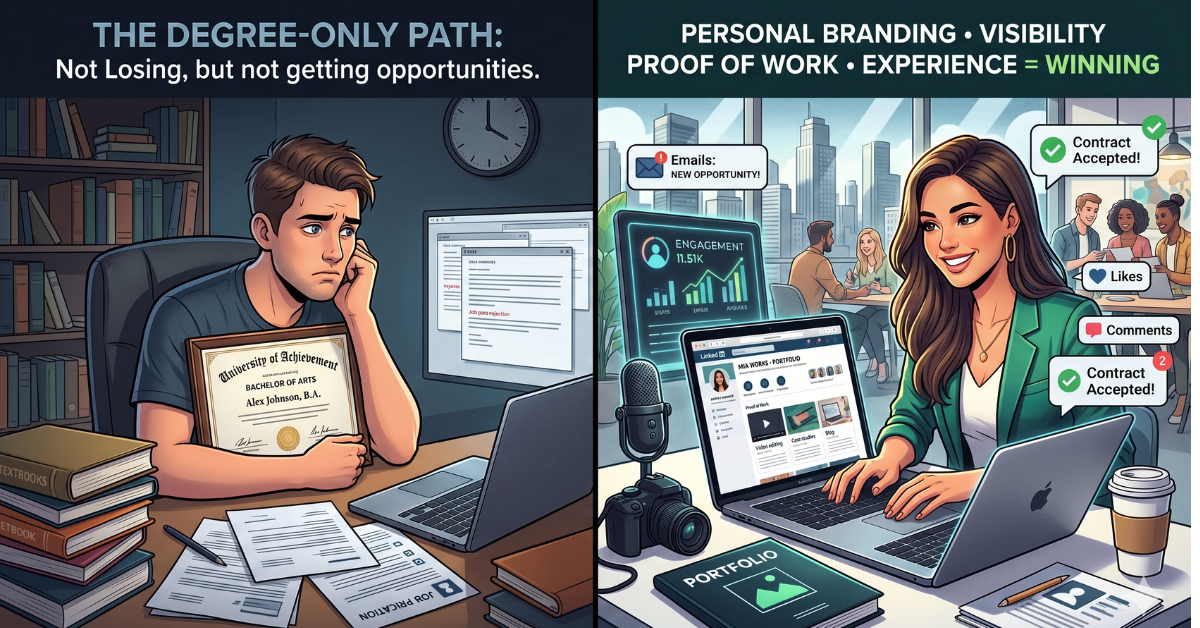
The internet has redefined how opportunities are earned. In 2026, a degree might get your foot in the door, but visibility, undeniable proof of work, and hands-on experience are what actually close the deal.
The job market has fundamentally changed.
In 2026, companies are no longer hiring based only on college degrees. Hiring trends are increasingly shifting toward real skills, proof of work, experience, communication, and online presence.
Today, a strong digital footprint often speaks louder than a resume. Recruiters, clients, and even collaborators are more likely to trust people who actively showcase what they build, learn, and contribute online.
A degree can still open opportunities, but in a highly competitive digital world, personal branding has become one of the most valuable career assets a person can build.
The Shift From Traditional Careers to Digital Visibility
In 2026, career growth is no longer defined only by qualifications — but by how effectively people showcase their skills, experience, and value online.
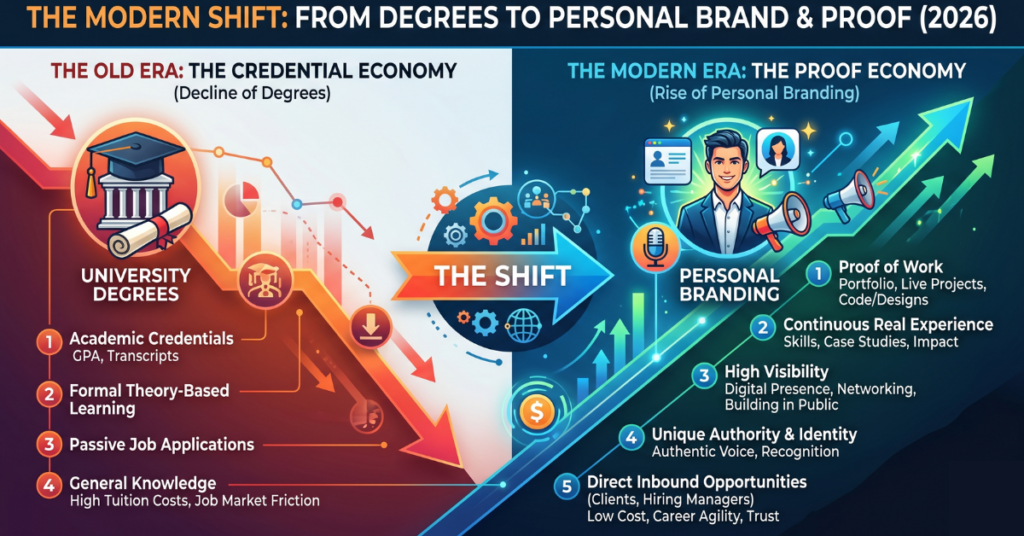
For years, the traditional career path followed a simple formula: earn a degree, build a resume, and apply for jobs. While education still plays an important role, the modern professional world has evolved far beyond qualifications alone.
Today, companies, clients, and recruiters increasingly pay attention to practical skills, proof of work, communication, and online presence before making hiring decisions. A portfolio, personal website, LinkedIn profile, or even consistently shared insights online can create opportunities that a degree alone often cannot.
The modern approach is not about replacing education — it is about combining knowledge with visibility. In a highly competitive digital environment, people who actively showcase their work and build trust online are often more likely to stand out than those who rely only on traditional credentials.
What Personal Branding Actually Means ?
Personal branding is not about pretending to be famous online — it is about building trust by consistently showing your skills, work, and ideas.
A lot of people misunderstand personal branding. They assume it means showing off online, chasing followers, or pretending to be successful. In reality, personal branding is much simpler and more practical than that.
Personal branding is the process of building trust and credibility by consistently sharing what you do, what you learn, and what value you can provide. It is the digital representation of your skills, experience, communication, and personality.
Today, people no longer rely only on resumes to evaluate someone. They often look at portfolios, projects, LinkedIn profiles, content, or even the way a person communicates online. A developer may build a brand by sharing projects, a designer through creative work, and a marketer by sharing insights and ideas. Over time, this visibility helps people stand out in a crowded digital world.
The biggest advantage of personal branding is that it creates opportunities beyond traditional applications. Instead of waiting to be noticed, people can showcase their abilities publicly and attract the right audience, clients, recruiters, or collaborations naturally.
In simple terms, personal branding is not about pretending to be someone else online. It is about consistently showing proof of who you already are and what you are capable of doing.
How to Start Building a Personal Brand in 2026
Building a personal brand does not require thousands of followers. It starts with consistently showing your skills, ideas, and work online.
Step 1 — Build a Professional Online Presence
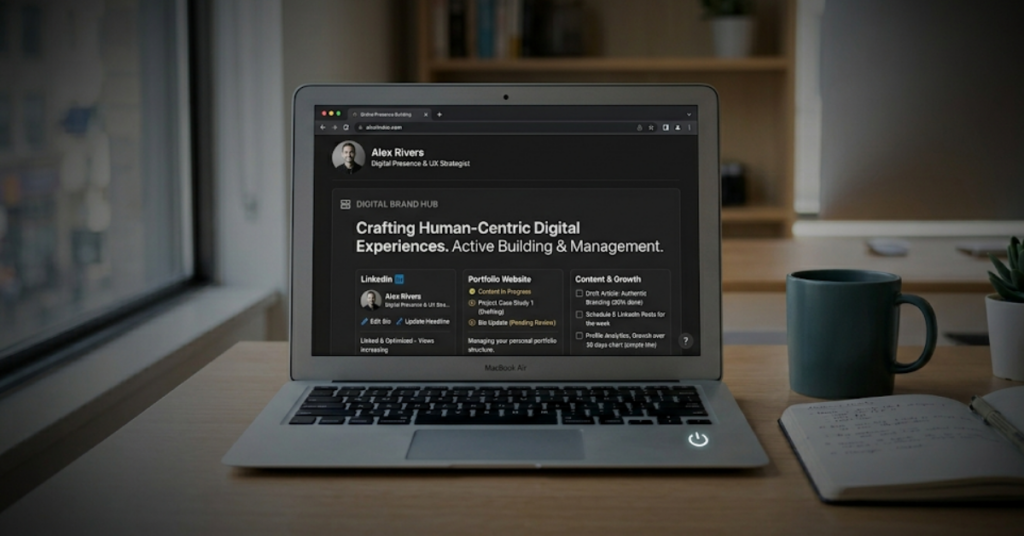
The first step is creating a professional online presence. This can include platforms like LinkedIn, a simple portfolio website, or any space where people can learn about your skills and work.
In 2026, many opportunities begin online. A clean and professional digital presence helps recruiters, clients, and collaborators understand who you are before they even contact you.
Step 2 — Share What You Learn
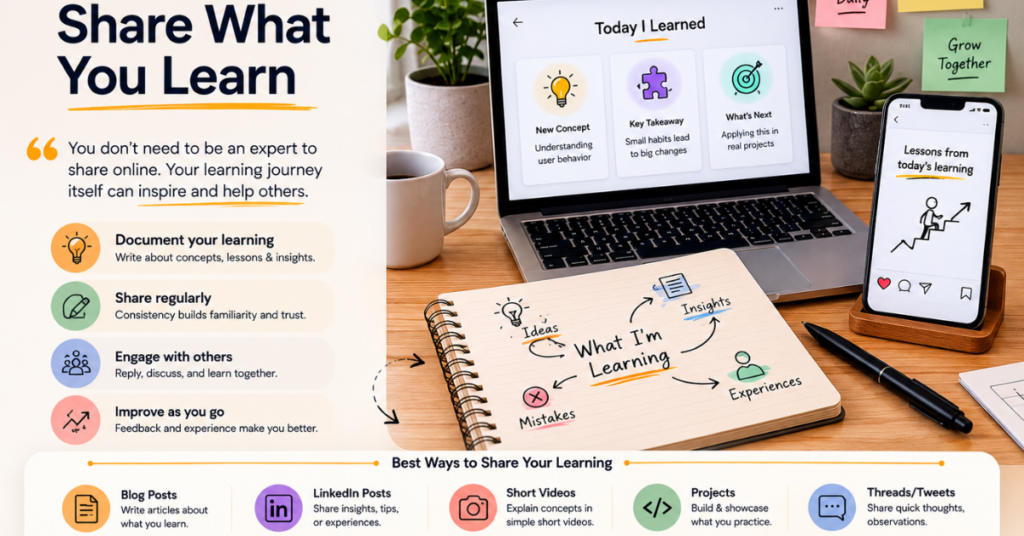
One of the biggest misconceptions about personal branding is that people need to be experts before sharing online. In reality, documenting the learning process itself can build trust and relatability.
Sharing insights, lessons, projects, or experiences consistently helps people understand your interests, growth, and expertise over time.
Step 3 — Build Proof of Work
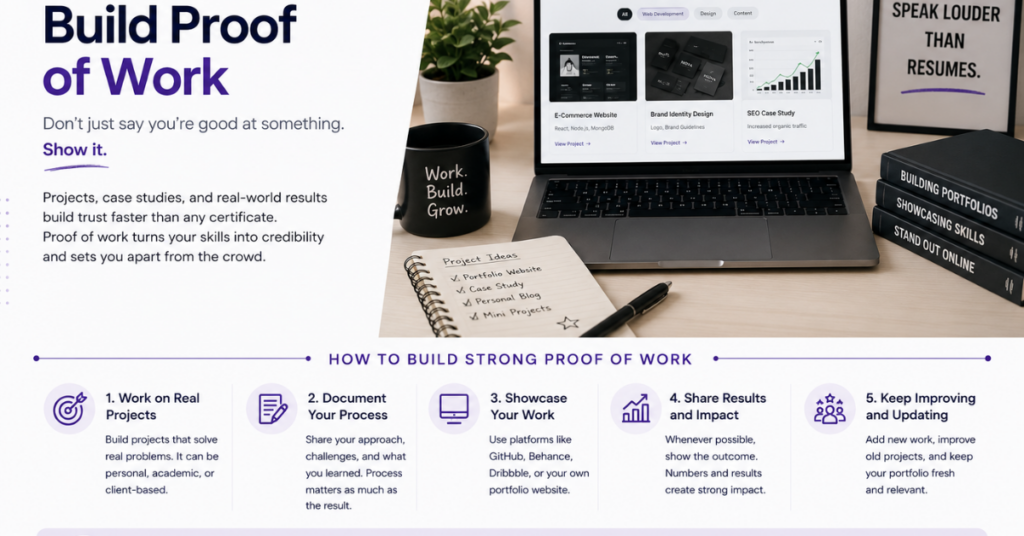
Certificates may show what someone has studied, but projects and proof of work demonstrate practical ability. Whether it is a website, design, campaign, article, or case study, real work creates stronger credibility than claims alone.
Even small projects can help beginners stand out when presented properly online.
Step 4 — Improve Communication Skills
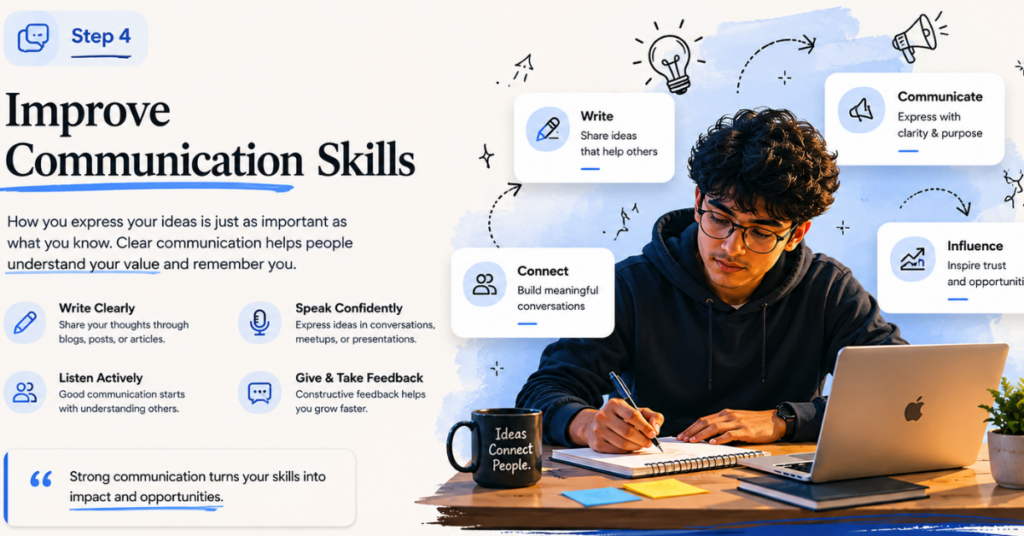
Strong communication has become one of the most valuable professional skills in the digital world. The ability to express ideas clearly through writing, content, or conversation helps people build trust faster online.
Many talented individuals stay unnoticed simply because they struggle to communicate their value effectively.
Step 5 — Stay Consistent
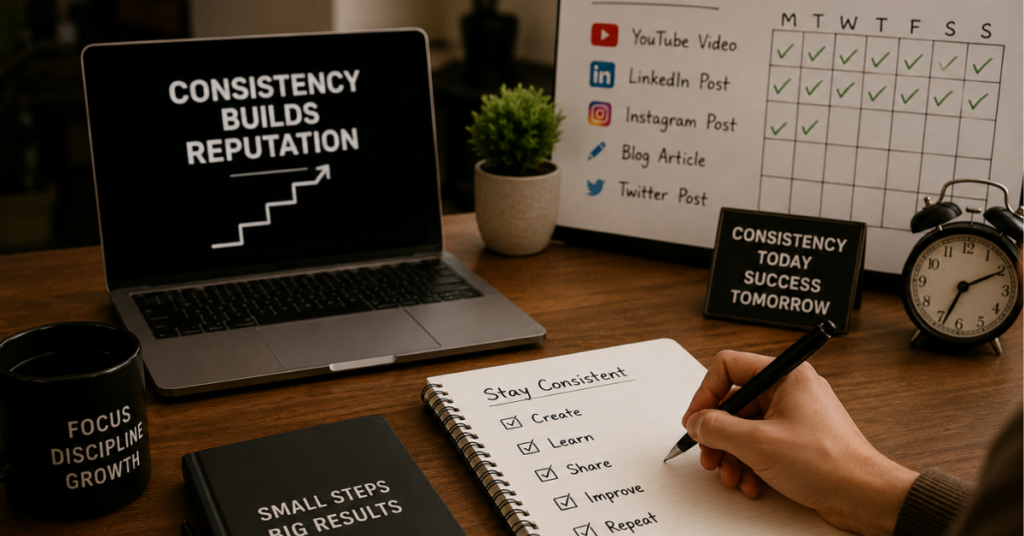
Personal branding is not built overnight. It grows through consistency. Small actions repeated over time — posting content, sharing projects, improving skills, and showing progress — gradually create visibility and recognition.
Consistency often matters more than perfection.
Building a personal brand in 2026 is less about becoming an influencer and more about becoming visible. People who consistently showcase their skills, ideas, and work online are more likely to create opportunities for themselves in a competitive digital world.